


A toothache can be difficult enough to deal with. Imagine experiencing neck pain along with the pesky toothache. Unimaginable, isn’t it?
If you’ve had the unfortunate experience of dealing with toothache and neck pain at the same time, you’ve probably wondered – are these two connected or just an unfortunate coincidence?
Here’s the thing – there is indeed a connection between your mouth and your neck. Certain oral health problems can cause pain beyond your teeth and mouth, extending to areas of your body like your neck, ears, head and even your shoulders.
Dental Problems that Could Cause Neck Pain
Your mouth is the gateway to the rest of your body. What happens in your mouth can trigger problems elsewhere in your body — like in your neck.
So, what are the dental problems that can cause pain in your neck?
Bruxism
Have you heard of teeth grinding and clenching or are you guilty of it? Bruxism is the medical term for this condition where you grind and clench your teeth.
While teeth clenching and grinding can happen during the day, more often than not, it happens at night while you are asleep – leaving you blissfully unaware. The risk here is that you will be left completely in the dark about this condition, especially if you live or sleep alone. If bruxism goes undetected, it could lead to severe dental problems like tooth wear.
So, how does bruxism cause neck pain? When you grind and clench your teeth, you place excessive pressure on not only your teeth but also the muscles in your jaw, which are connected to the muscles in your neck. This can lead to tension and pain in your neck.
If you frequently wake up with a sore jaw, unexplained headaches, jaw pain or even neck pain, bruxism could be the cause. If these symptoms sound familiar, make sure to schedule an appointment with us to identify the root cause of the problem and find relief.
Temperomandibular Joint Disorder (TMJD)
TMJD or TMJ Disorder/Dysfunction is a condition often caused by the clenching of teeth. Along with that, problems such as joint wear and tear and an uneven bite are also causes of TMJD.
Now, you may be wondering about what this Temporomandibular Joint is and its importance.
The TMJ is the joint that connects your jaw to the skull. Found on both sides of your face, in front of each ear, this joint plays a significant role when it comes to functions like speaking, eating and swallowing.
Dysfunction or injuries to these joints such as muscle problems around the TMJ or issues with the joint itself can also cause pain that can radiate to your face, head, neck and ears. It’s typically triggered by actions that result in jaw motions such as chewing or opening and closing your mouth.
Common symptoms to watch out for include locking or clicking of your jaw, an uncomfortable bite, pain in the jaw when eating and headaches. So, if you notice any of these symptoms along with neck pain, make sure to schedule an appointment with our dentist.
Wisdom Teeth
Did you know that wisdom teeth can also cause neck pain?
For some, wisdom teeth erupt without any complications. However, in most cases, wisdom teeth get impacted because of inadequate space in your mouth.
Impacted wisdom teeth can cause changes in bite and jaw position, placing unnecessary strain on the jaw. This increased tension can eventually spread to the neck, causing pain and discomfort.
While extraction is often the best way to treat impacted wisdom teeth, the procedure can also cause some pain around the neck. However, there is no need to be concerned because this pain typically subsides within a couple of days. If it doesn’t, make sure to visit our clinic, as it could indicate an infection.
When Should I See a Dentist?
If you suspect your neck pain is resulting from a dental problem, it’s important to seek professional care – because tooth pain that radiates to your neck is not something to ignore.
But when should you take action? Should you visit the dentist right away or wait until you are ready to book an appointment? If unsure, here are some signs that you should seek professional dental care.
- Persistent Pain: If your tooth pain or neck pain lasts more than a couple of days.
- Signs of Infection: If you are experiencing signs of an infection like swelling, redness, fever or a foul taste in your mouth along with neck pain.
- Severe Discomfort: If the pain is intense enough to disrupt daily activities and your sleep.
- Difficulty Swallowing or Breathing: If you have trouble swallowing or breathing.
- Numbness: If you lose sensation in your mouth, face or neck.
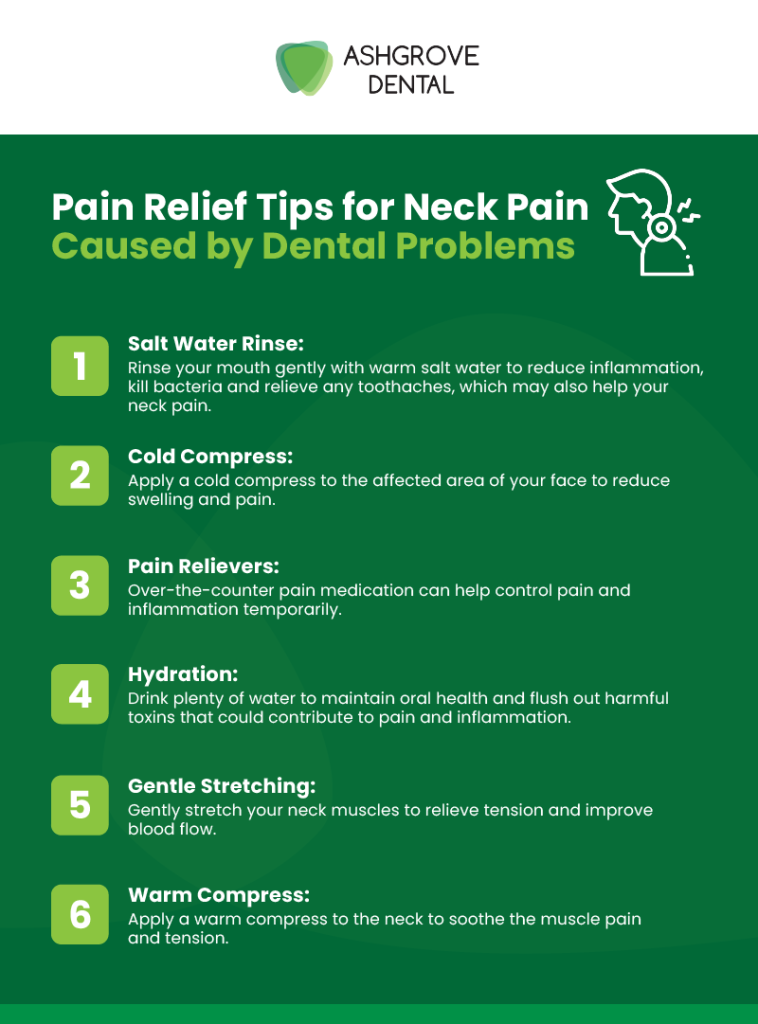
Ways to Alleviate Tooth-Related Neck Pain
If your neck pain is a result of a dental problem, treating the dental problem should be your first priority. However, while you wait for your appointment, there are a few simple steps you can take to alleviate your pain.
Tooth-related pain doesn’t only affect your mouth. As you now know, it can extend well beyond your teeth to your neck and head because of the interconnected nature of the nerves in your face and neck. If you suspect a dental issue is causing your neck pain, don’t ignore it. Call our friendly team at Ashgrove Dental as soon as possible to book an appointment. Timely treatment will help prevent the issue from worsening and provide some much-needed relief for you.