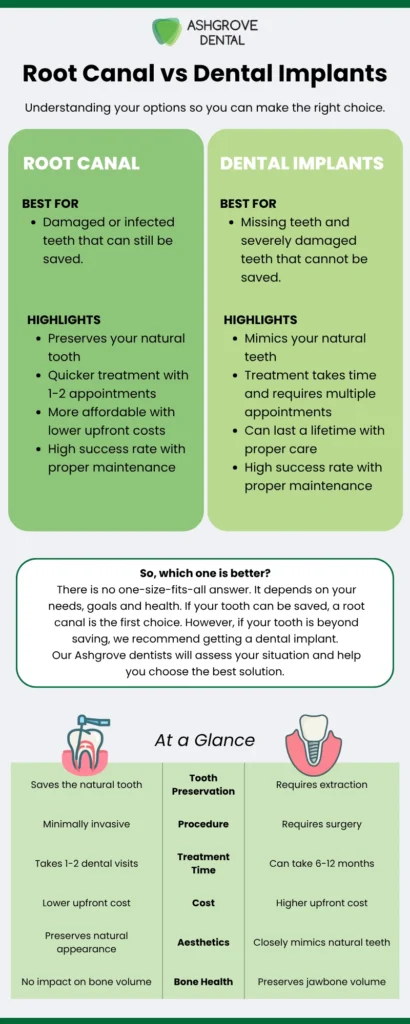

If you have decayed, damaged or infected teeth, you may find yourself torn between getting a root canal vs dental implant.
While it’s not a decision you can make on your own (our dentists will provide their professional opinion), it doesn’t hurt to know about the two procedures beforehand. Especially because it will give you the peace of mind you seek.
So here’s everything you need to know about root canals and dental implants.
What Is Root Canal Treatment?
Also known as endodontic treatment, root canal treatment treats severely infected or damaged teeth without needing tooth extraction. In other words, it’s a safe and effective way of saving a damaged tooth.
Advantages of Root Canal Treatment
- Provides pain relief from damaged, infected or decayed teeth.
- Helps avoid tooth extraction by preserving your natural tooth.
- Improves the appearance of your smile.
- Improves oral and overall health by removing bacteria and infected pulp, preventing the spread of infection.
- Restores biting and chewing function by reinforcing the structure of your teeth.
- Minimal recovery time of about 2-3 days, given their minimally invasive nature.
When Is a Root Canal Necessary?
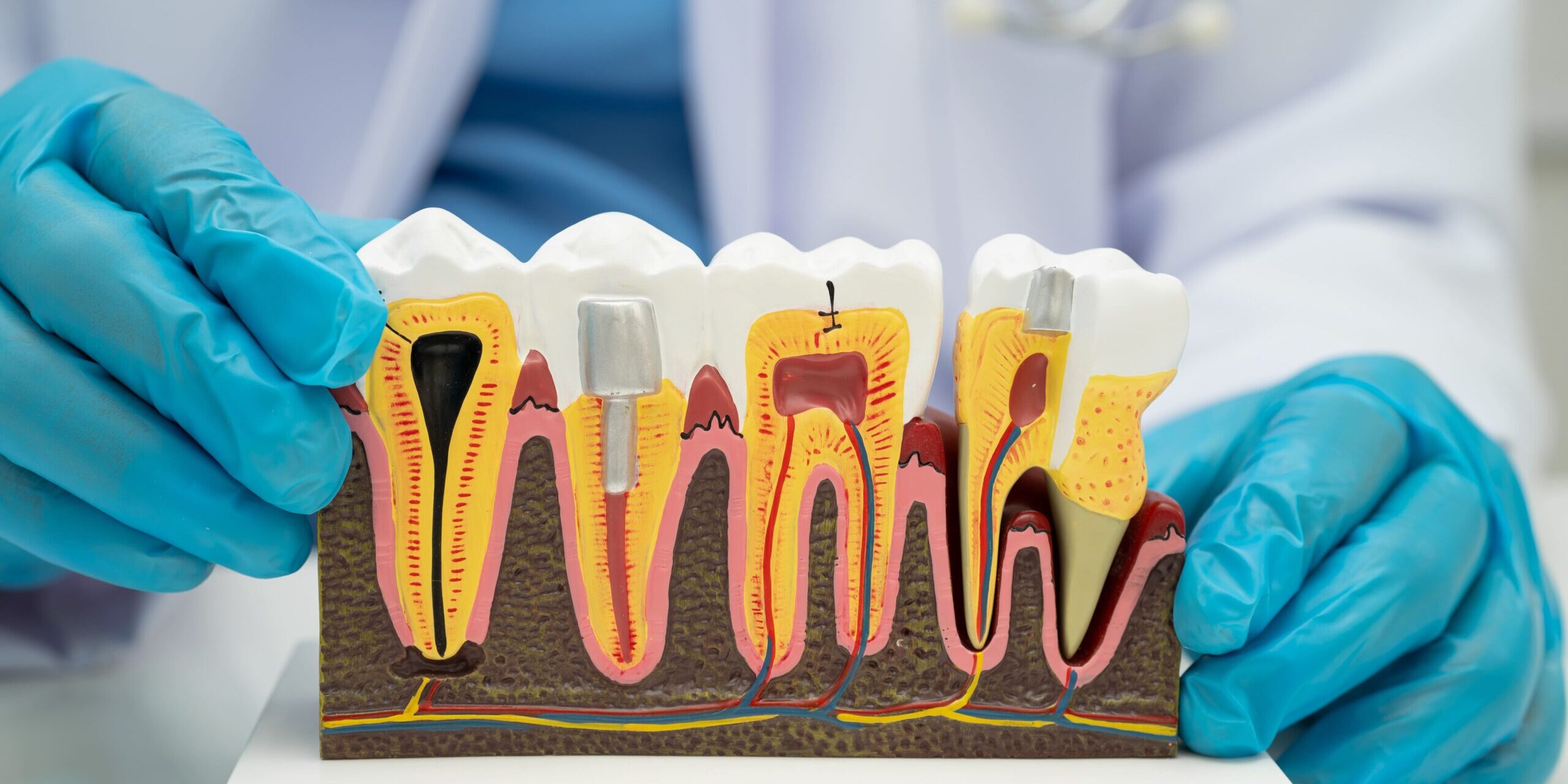
A root canal is necessary when the pulp of your tooth is damaged or infected. The tooth pulp is the innermost layer of the tooth, which consists of nerves, blood vessels and connective tissue.
The tooth pulp could be damaged/infected due to the following reasons:
- Untreated tooth decay that progresses deep into the tooth and its pulp.
- Physical injury or trauma to the teeth. This may occur without any visible external signs.
- Cracks or fractures in teeth which allow bacteria to reach the pulp and cause irritation.
What Does a Root Canal Treatment Look Like?
- During your initial consultation, our dentist will examine the tooth by taking X-rays to determine the extent of infection or damage to the pulp.
- The area around the affected tooth is numbed with a local anaesthetic, helping ensure patient comfort during the procedure.
- A rubber dam (a sheet) is placed around the tooth to keep it clean, dry and free from saliva.
- Our dentist will drill a small hole into the crown to reach the pulp chamber.
- Infected or damaged pulp will be removed from the pulp chambers and root canals before cleaning, shaping and disinfecting.
- Then the empty canals are filled with a biocompatible material called gutta-percha. It seals the space, preventing bacteria from re-entering the tooth.
- Finally, a dental restoration (most often a dental crown) is placed to restore strength and provide protection.
What are Dental Implants?
Dental implants are artificial tooth roots which replace missing teeth right down to the root. They are surgically placed into the jawbone and provide a stable foundation for restorations like crowns, bridges and dentures. All while restoring function and aesthetics.
What are the Advantages of Dental Implants?
- Preserves the health of your jawbone by serving as artificial tooth roots and stimulating it.
- Provides a natural-looking smile that feels and looks just like your natural teeth.
- The implant post can last a lifetime with proper care and maintenance.
- Provides stability without slipping, clicking or causing any discomfort.
- Easy to maintain.
When Do I Need Dental Implants?
Dental implants are a good choice if you have missing teeth or severely damaged or infected teeth that cannot be saved. In addition, you can get dental implants if you have loose dentures or a sunken facial appearance due to bone loss.
Can Anyone Get Dental Implants?
Not everyone can get dental implants. Eligibility depends on factors such as:
- Having Adequate Bone Density: Sufficient bone density is required because the titanium post must fuse with your jawbone. If you don’t have enough bone density, our dentist will perform a bone graft first.
- Good Oral Health: Your oral health matters. If you have any untreated dental concerns like gum disease or tooth decay, they must be addressed first before getting dental implants.
- Overall Health: Good overall health is important for the dental implant recovery process, as it depends on your body’s natural ability to heal. In addition, autoimmune disorders, which affect immunity or tissue repair and uncontrolled diabetes can interfere with the healing process.
- Lifestyle Habits: If you smoke and consume alcohol in excess, dental implants may not be a good option. This is because these habits can interfere with the healing process and jeopardise the success of the procedure.
The Dental Implant Procedure
- The implant procedure begins with a consultation where we will examine your mouth and talk about your needs.
- If dental implants are the right choice for you, we will develop a personalised treatment plan that takes into account your needs, goals and health.
- If you need additional treatment, like a bone graft if you’ve lost bone volume, we will kick off the process accordingly.
- The actual implant process begins with implant surgery. We will place the implant post into your jawbone with utmost precision, laying the foundation. (Don’t worry, you will be under local anaesthesia for this part).
- Following implant placement, it must undergo osseointegration. This is when the implant fuses with your bone to provide a solid and stable foundation. This step can take about 3-6 months.
- When healing is complete, we will place an abutment (a small piece that connects the implant post with the restoration) on your implant.
- Finally, your custom-made restoration will be fitted, ensuring your smile looks natural and functions properly.