

Nobody has bright, paper-white teeth. If you’ve been side-eyeing your smile in every photo lately because of its slight yellow tone, the best way to treat yellow teeth depends entirely on why your teeth are yellow in the first place.
Sometimes, having slightly yellow teeth is normal. This is because your enamel is translucent and the dentine beneath is more yellow-toned. However, it could also be surface staining from coffee, tea or smoking. In such cases, professional teeth whitening is usually the most effective and affordable option. If you have deeper, structural discolouration, dental bonding, veneers, or crowns are better options.
A quick consultation is the fastest way to find out which category you’re in.
Why Are My Teeth Yellow?
The colour of your teeth depends on two factors.
- The enamel (the hard outer layer), which is slightly translucent
- The dentin, which has a natural yellow tone
So if your enamel is thinner or you have translucent teeth, more of that yellow shows through. This is why some have a warmer tooth colour without any dental problems.
Beyond that, other factors can also make your teeth yellow.
- Ageing: The enamel naturally thins over the years, making the yellow dentin underneath more visible.
- Genetics: Enamel thickness varies from person to person, which affects the colour of your teeth.
- Diet: Highly pigmented foods and drinks like coffee, tea, red wine, dark sodas and sauces all contain staining compounds that build up on enamel over time
- Smoking and Tobacco: These habits can cause deep and stubborn surface stains on your teeth.
- Poor Oral Hygiene: Plaque and tartar buildup can dull the natural colour of your teeth, making it appear yellow.
- Teeth Grinding (Bruxism): This wears down enamel over time, exposing more of the yellow layer beneath.
- Fluorosis: Too much fluoride during childhood tooth development can cause discolouration.
- Certain Medications: Certain medications like antihistamines, albuterol and blood pressure meds can lead to discolouration.
Types of Tooth Staining
There are two main types of tooth discolouration. How we treat and get rid of teeth stains depends on the type of staining.
- Extrinsic Staining: Affects the surface of your enamel and is typically caused by food, drink and smoking. This kind of staining can be treated using whitening treatments.
- Intrinsic Staining: Starts inside the tooth, in the dentin itself. These stains usually result from trauma, certain medications or fluorosis.
Is Yellow Teeth a Cosmetic Problem?
Most yellowing is purely cosmetic, especially if there’s no pain, no sensitivity and nothing to worry about beyond appearance. However, if yellowing appears alongside other symptoms like sensitivity, pain or bad breath, it could be something more and is worth paying attention to.
Those symptoms can point to a dental problem like cavities, enamel erosion or gum disease, rather than mere staining. If that’s what you’re noticing, make an appointment with your dentist as soon as possible.
The Best Way to Treat Yellow Teeth
In-Chair Whitening
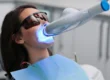
This is the fastest option, and it’s built for surface staining. The whole treatment takes about an hour and leaves you with visible results the same day. Effects typically last anywhere from six months to a few years depending on how well you care for your whitened teeth.
Take-Home Whitening Trays
Take-home whitening trays help you achieve the same results as in-chair whitening, just on a slower timeline. You will need to wear custom-fitted trays daily for two to four weeks or longer, depending on severity and how well you follow your dentist’s instructions.
Dental Bonding
If you have a few noticeably discoloured teeth, including some intrinsic staining that whitening can’t treat, dental bonding could be a good option. It’s usually done in a single visit, where tooth-coloured resin is applied directly to the tooth. While it’s more affordable than veneers, it typically needs touch-ups every five to seven years.
Porcelain Veneers
Veneers make sense when multiple teeth are affected, or when staining simply hasn’t responded to whitening. These are thin ceramic shells bonded to the front of your teeth. They are durable and natural-looking, but cost more and require multiple visits to the dentist.
Dental Crowns
If discolouration shows up alongside decay or a weakened tooth, we may recommend dental crowns. They aren’t just a cosmetic treatment, crowns can also strengthen the tooth and protect it against further damage.
How Can I Prevent Yellow Teeth From Getting Worse?
Here are a few habits you can implement into your daily routine:
- Brush twice daily with fluoride toothpaste, and floss daily to prevent plaque buildup, which dulls tooth colour on its own
- Drink coffee, tea and wine in moderation, and use a straw when you do
- Rinse with water after having anything staining, if brushing right away isn’t an option
- If you smoke, quitting is one of the highest-impact things you can do for tooth colour and overall health.
Common Myths About Yellow Teeth
- Yellow teeth mean poor hygiene. Not necessarily. Plenty of people with excellent oral hygiene simply have naturally thinner enamel or more visible dentin.
- Whitening toothpaste works instantly. It helps lift surface stains over time, but it won’t change your tooth’s underlying shade overnight. That’s what professional whitening is for.
- Whiter teeth always mean healthier. This is not true. Overusing whitening treatments can wear down enamel and increase sensitivity.
Can Yellow Teeth Be Reversed?
Surface staining can be reversed with whitening treatments. Intrinsic staining from medication, trauma or fluorosis often needs bonding, veneers or crowns instead, since whitening can’t fully reach that inner layer.
Yellow teeth aren’t automatically a problem — but if they’re bothering you, the right fix depends on what’s actually causing it, not just reaching for the strongest whitening kit you can find.
A quick consultation with one of our dentists at Ashgrove Dental will tell you exactly what you’re dealing with and which treatment on this list is actually suitable for your teeth.