
Are parts of your teeth starting to look a little see-through?
Seeing your pearly whites in this state can be a little unsettling and leave you wondering about what’s going on.
This is what’s commonly referred to as translucent teeth. The condition is exactly what it sounds like. It’s when the edges or sections of your teeth start to take on a semi-transparent appearance instead of that pearly white look.
Your immediate reaction upon seeing this would be to panic over the aesthetic side of it. However, the reality is that translucency is not just a cosmetic issue.
Translucent teeth can be a sign of something deeper that may require professional attention. Because ignoring it won’t make it go away.
Why Are My Teeth Translucent?
Most of the time, translucent teeth come down to one main factor – enamel thinning.
The enamel is the hard outer layer of your teeth. It’s what protects the softer dentin which lies underneath. What many people don’t know or realise is that it is the dentin that gives your teeth most of their colour. The enamel is already slightly translucent.
So, when the enamel wears away, the dentin becomes more visible. And since the dentin doesn’t extend to the tips of your teeth, the edges are the first place where translucency shows up.
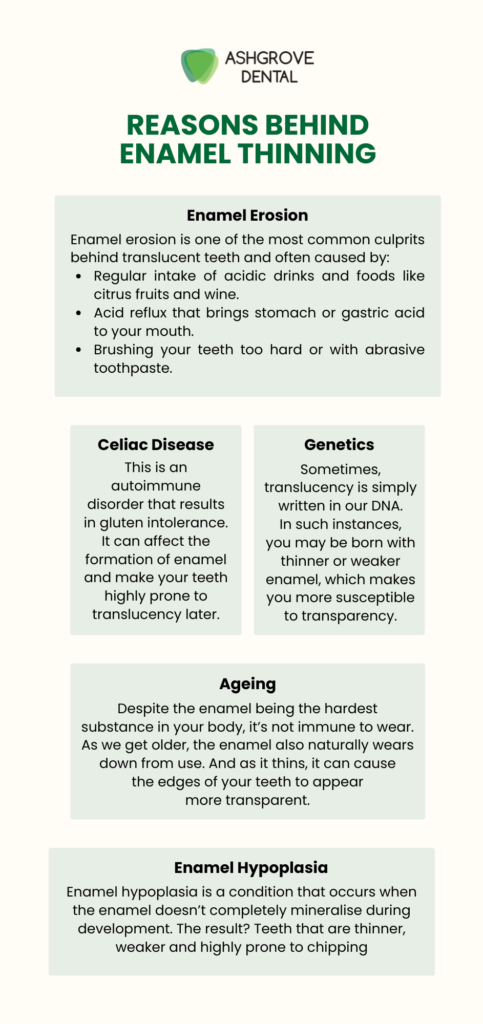
So, if you are wondering whether having translucent teeth is normal, our answer is that it can be.
Want to know more about enamel erosion? Read our blog on Can Enamel Grow Back?
How to Fix Translucent Teeth Naturally
When treating translucent teeth, treatments such as fluoride treatments, dental bonding and veneers can protect and strengthen your teeth. However, none of these treatments can restore lost enamel.
And if you are looking for natural ways to fix translucent teeth, there are ways to remineralise your teeth.
What is Remineralising?
Remineralisation is a process that helps restore minerals to your enamel. It is the body’s natural repair process which counterbalances demineralisation (the loss of minerals in your teeth due to factors like eating and drinking).
By replenishing lost minerals, this process helps strengthen your teeth and prevent further dental problems. It will also reduce sensitivity and make your teeth appear less translucent over time.
How to Remineralise Your Teeth Naturally
Here’s where you can start:
1. Adjust Your Diet
What you eat and drink doesn’t just fuel your body. It also helps strengthen and protect your teeth. So, in order to remineralise your teeth, you must:
- Intake calcium-rich foods like almonds, dairy and leafy greens.
- Get vitamin D from sunlight and food items like fatty fish.
- Phosphorus-rich foods like eggs, meat and nuts.
2. Using a Remineralising Toothpaste
Switch to a toothpaste which contains ingredients like hydroxyapatite or calcium phosphate. These help replenish minerals in weakened areas of your teeth and enamel rebuilding.
3. Take Mineral Supplements
If your diet is missing important minerals like calcium and magnesium, supplements can be helpful. Now, this doesn’t mean taking more supplements is the way to go. Always check with a healthcare provider first before starting a supplement regimen to avoid overdoing or interfering with other conditions.
4. Avoid Acidic Foods and Beverages
Some of the best things in life can be acidic. Think citrus, wine, vinegar-based dressings and so on. However, these acids can weaken your enamel and increase translucency. This doesn’t mean you should completely eliminate them from your diet. What you can do is reduce your intake to protect your teeth and allow remineralisation to take effect.
Finally, you also need patience. Because remineralisation doesn’t happen overnight. Some may notice subtle improvements in a few weeks, while others need several months of dietary and lifestyle changes.
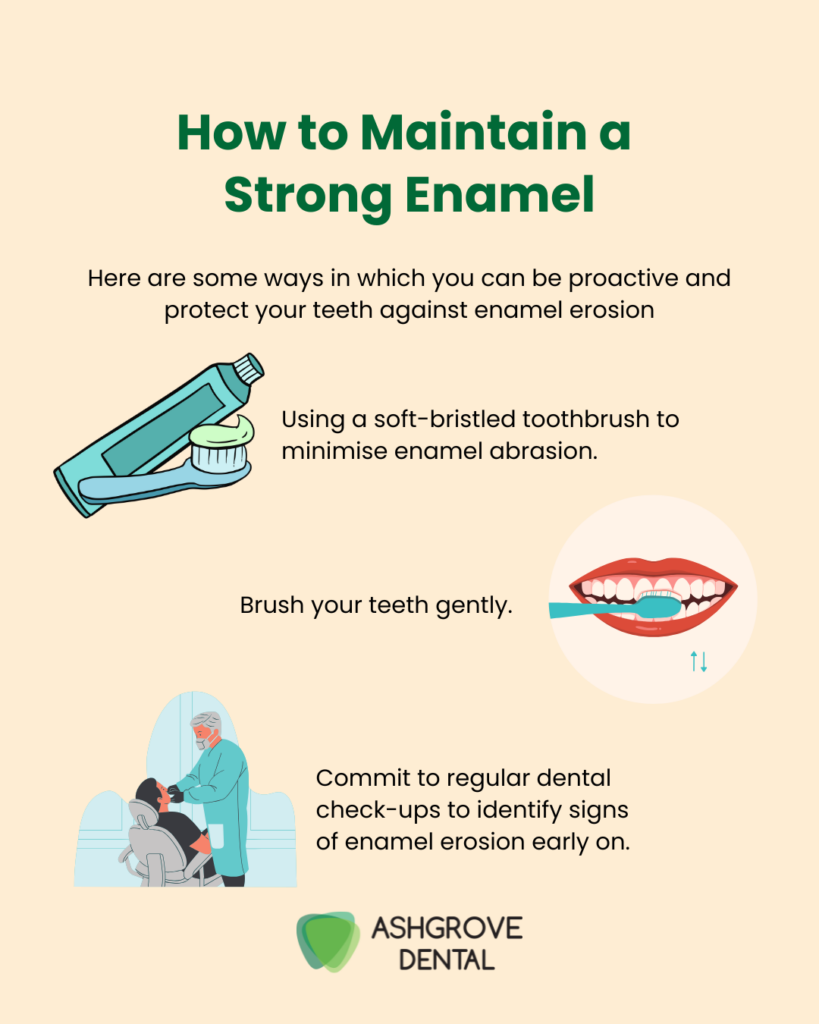
How to Maintain a Strong Enamel
In addition to the above-mentioned tips, you can also be proactive and protect your teeth against enamel erosion by:
The truth is translucent teeth don’t appear overnight. They don’t disappear overnight either. However, they can be addressed through consistent choices and lifestyle changes.
Worried about your enamel health? Schedule an appointment with us today.