

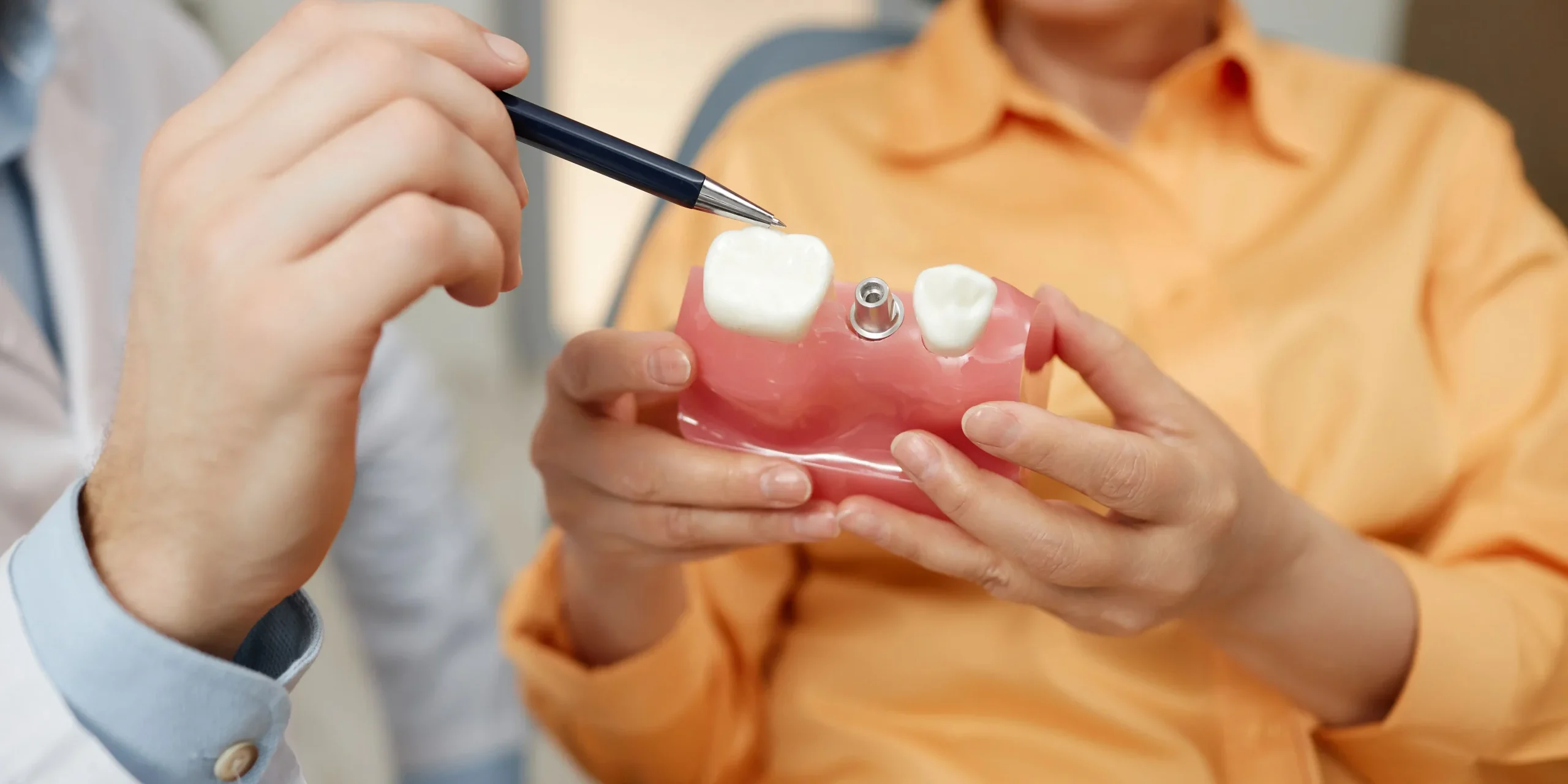
Imagine you are at the dentist for your implant consultation and the term “healing abutments” pops up, leaving you wondering – “What exactly are healing abutments?”
Healing abutments, also known as healing caps (or gingival formers) are a small component of dental implants. Despite their size, they play an important role in your implant recovery process as they support your gums as they heal around the implant. That’s not all, they also help prevent gum tissue from receding.
What is a Healing Abutment?
A healing abutment, as mentioned before is a temporary component attached to the top of a dental implant once the implant post is surgically inserted into your jawbone.
The primary purpose is to support and guide the healing process of both the soft gum tissue and the hard bone tissue surrounding the implant. Essentially, it helps shape and maintain the gum tissue around the implant site, ensuring it forms correctly.
This healing abutment will stay in place during the process of osseointegration (where the implant fuses with your jawbone to provide a stable and secure foundation) and will be replaced by the permanent implant abutment afterwards. They typically stay in for about 1-4 weeks, but this can vary depending on the healing process and other factors.
What are the Benefits of Healing Abutments?
Healing abutments don’t just play a part in guiding the healing process. The benefits of healing abutments extend beyond that to contribute significantly to the success of your implant procedure. Benefits include:
- Promotes Tissue Healing: As mentioned before, healing abutments play an important role in guiding your gum tissue to heal around your dental implant. What this does is reduce the risk of complications such as gum inflammation or infections.
- Improves Aesthetics: By shaping your gum into the correct form, healing abutments help create a natural-looking emergence for your prosthetic teeth. In simpler terms, the healing abutment helps make your implant look and feel like a part of your natural smile.
- Protects your Dental Implant: Healing abutments also play a role in keeping plaque and debris away from the implant post. This layer of protection assists in reducing the risk of infections while contributing to the longevity and success of your dental implant.
- Reduces Treatment Time: Since healing abutments keep your gum line open during the healing stage, they remove the need to reopen the gums when placing the final abutment. Ultimately, this helps reduce the overall treatment time.
- Facilitates Oral Hygiene: By making it easier to clean around your implant site, healing abutments allow you to maintain good oral hygiene during the healing process.
How are Healing Abutments Fitted?
When it comes to fitting healing abutments to your implant, there are two common methods:
- One-Stage Approach: In the one-stage approach, as the name suggests, the implant post and the healing abutment are placed at the same time. The implant post will be surgically inserted into your jawbone followed by the healing abutment, which will protrude slightly above the gum line. Then, as the implant fuses with the jawbone, the gum tissue will heal and shape itself around the healing cap. Once the integration process is complete, the healing abutment will be removed, giving way to the dental abutment and crown.
- Two-Stage Approach: This approach takes a more gradual route with the implant post inserted into the jawbone first. The gums are then closed over the implant to allow it to heal and fuse with the jawbone. Once that’s done, the gums are carefully reopened to expose the implant, and the healing abutment is attached. Then, the gum tissue will be left to heal and shape around the abutment before it’s removed and replaced with the permanent abutment and crown.
What are the Types of Healing Abutments?
Healing abutments come in various types in order to accommodate different situations. Accordingly, the different types of healing abutments include:
- Straight Abutments: These healing abutments are most commonly used and are suitable for straightforward cases.
- Angled Abutments: Designed to address anatomical challenges and aesthetic concerns, these angled abutments facilitate better positioning and appearance of the final restoration.
- Temporary Abutments: Used for immediate restoration, these abutments provide temporary support until the final restoration is placed.
- Custom Healing Abutments: These abutments are custom-made after taking into account the shape of your gum tissue and the alignment of surrounding teeth.
In addition, other types of healing abutments differ according to the material used including titanium abutments and zirconia abutments. Out of these, titanium is the most commonly used material owing to its strength, durability and biocompatibility. Zirconia abutments, on the other hand, offer enhanced aesthetic appeal, resembling the natural colour of your teeth.
And there you have it – all the information you need to know about healing abutments. This small yet mighty device plays an important role in ensuring proper healing of your gums while shaping them to look like your natural gum line.
If you want to learn more about healing implants or are considering getting dental implants, speak to our friendly team.