


If you are experiencing tooth decay, a crack or a little chip in your tooth, fillings are usually the number one choice. It steps in to restore structure and also to protect what’s left and prevent further damage.
Since fillings are the practical choice, you’d assume that pain from such dental issues would stop immediately. Right?
You may have seen this title and even felt a flicker of dread that it’s still going to hurt. We get it. After all, how much longer should you experience pain?
However, the thing is pain after a filling is not the same as the pain you’d experience from a cavity. It’s usually milder and temporary.
In other words, it’s your tooth adjusting and healing.
What Causes Tooth Pain After a Filling?
As we mentioned, tooth pain after a filling isn’t unusual. Sure, it’s annoying and even alarming (at times). But most of the time, it’s temporary – the kind of pain that goes away after a few days.
So, what’s really going on?
Tooth Sensitivity
This is the usual suspect.
After a filling, your tooth can become sensitive to temperature and even air. This sensitivity is often caused by an irritation that occurs after the procedure. In addition, a reaction to the filling material or even a tiny change in your bite can result in sensitivity.
It can feel alarming, but sensitivity is usually temporary. You can expect it to settle with time.
Inflamed or Irritated Nerve
A filling is a minimally invasive procedure. That still requires injecting a numbing agent, cleaning out the decayed area and filling the cavity. Meaning it can cause inflammation of the nerve inside the tooth, especially in deep fillings.
This discomfort can hang around for a few days or even a couple of weeks. However, as the nerve heals, the pain too should fade along with it.
Infection
Now this is more serious.
If bacteria get trapped beneath or around the filling, it can lead to an infection. The pain? Sharper and more persistent. You may also experience other symptoms like redness around the infected area, swelling, fever and discharge from the site.
If you feel like the pain isn’t reducing, call your dentist immediately.
Don’t wait this one out.
Allergic Reaction
While typically unusual, some people can experience sensitivities or allergies to certain materials used in fillings. When that happens, you may experience a burning sensation, irritation or redness in the surrounding gum and tissues.
That’s your body saying it doesn’t belong.
Suspect an allergic reaction? Speak with your dentist, as there are alternative materials available.
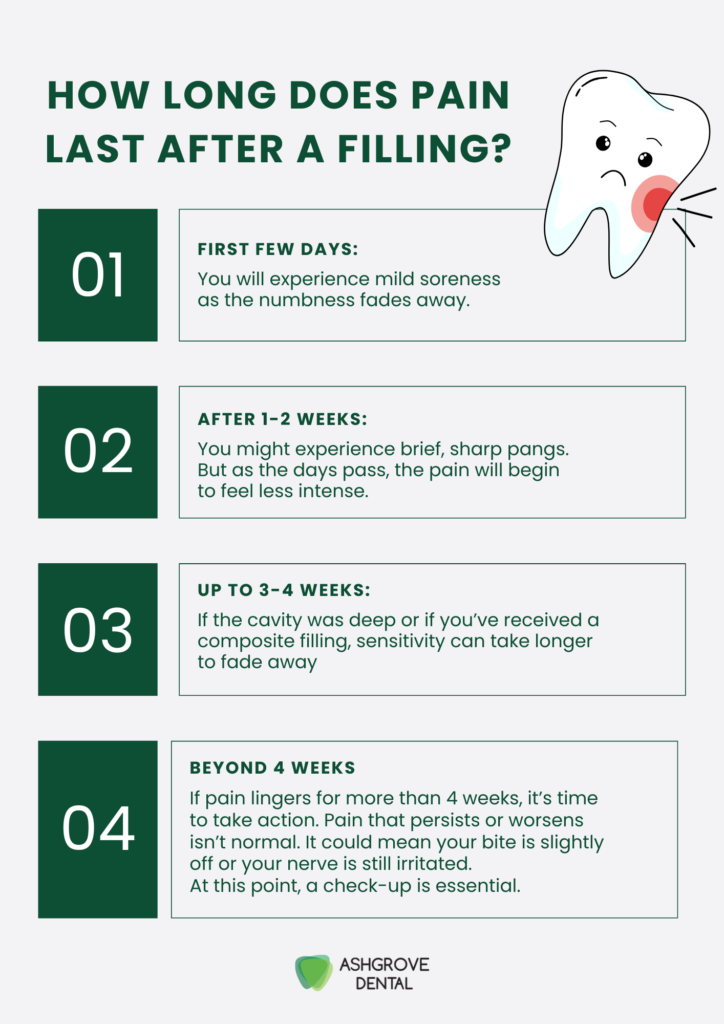
How Long Does Pain After a Filling Last?
For most people, sensitivity post-filling fades away quickly – and that’s normal. What’s not normal is pain that doesn’t go away.
How To Treat Pain After a Filling
When it comes to relieving pain after a filling, there are certain simple steps you can take at home before visiting our clinic.
How to Ease Pain at Home
1. Use a desensitising toothpaste to calm nerve endings inside your tooth. It’ll make them less reactive to hot/cold drinks or anything that makes you wince (like air and sweet treats).
2. Give your tooth a break by avoiding eating or drinking very hot, icy or sweet foods/drinks.
3. Keep brushing and flossing as usual. However, the key is to be gentle (especially around the filled tooth).
4. If you grind or clench your teeth at night, consider wearing a custom night guard.
5. Take over-the-counter pain medication (after a quick check with our dentist) if the discomfort is a little too much to bear. Make sure to always follow the directions provided.
Dental Treatment to Ease Tooth Pain After Filling
If you’ve tried out the home remedies but the pain doesn’t ease, don’t panic. It means your tooth needs professional attention.
The fix could be simple or require more attention.
When you visit us, we will first look at what’s causing you pain and provide appropriate treatment. This includes:
Adjustment and Repair
If your filling isn’t positioned just right (that is, your filling is too high) and is interfering with your bite, your dentist will adjust the height of your filling.
It’s that straightforward.
Replacing the Filling Material
Pain and sensitivity stemming from your composite filling? Our dentist will replace the filling with a different material.
Root Canal Treatment
If an infected pulp is causing you pain, you may need more advanced treatment like a root canal. This treatment removes the infected or damaged pulp to save your tooth. And if the tooth is weakened, a dental crown will be placed to restore function and appearance.
Do you suspect that the pain you are experiencing is because of your newly-filled? Contact our clinic right away. We will assess what is causing you pain and provide treatment accordingly.
Call us at (07) 3366 3355 to schedule an appointment.